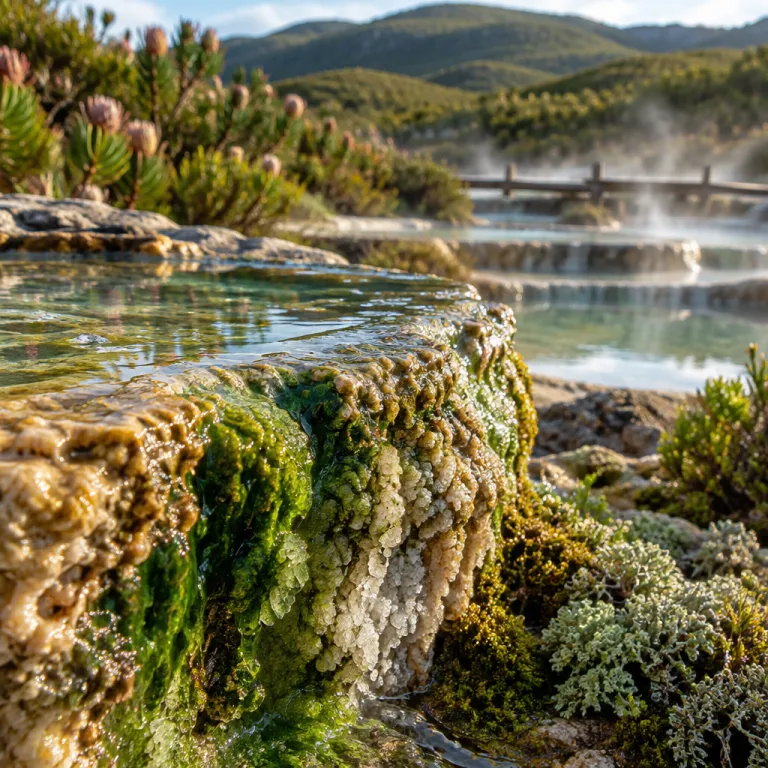
Where South Africa’s hot springs rise from the earth
South Africa’s thermal story begins deep below the surface, where fractured rock channels mineral rich water toward the light. In the western limb of the country, the Cederberg and Western Cape fold mountains trap ancient rain that resurfaces as natural hot pools along the broader Cape South corridor. Further north and east, in Limpopo and Mpumalanga, Africa South geology shifts again, and hot springs emerge along fault lines that run almost parallel to the escarpment.
For a South African traveller, this means a South Africa hot springs wellness retreat is not a generic spa weekend, but a direct encounter with the continent’s tectonic past. In the Western Cape, places such as The Baths near Citrusdal and Avalon Springs in Montagu sit where the Cape Fold Belt fractures, creating natural hot water that rises at temperatures between 40 °C and 43 °C. In the Klein Karoo, Calitzdorp Hot Springs lies just off the Garden Route, where semi arid plains meet rugged ridges and the air cools quickly at night, sharpening the contrast between crisp evenings and steaming pools.
Head north and the tone of Africa wellness changes again, as Limpopo’s Bela Bela hot spring complex and Mpumalanga’s Badplaas tap into different mineral signatures. These northern hot springs retreats often feel more resort like, with larger pools and family focused facilities, while the Western Cape options lean toward quieter wellness retreats that suit couples and small groups. Across the country, the common thread is that the water itself is the product, and any spa or wellness retreat programming is built around that constant, not the other way round.
How thermal water reshapes the idea of a spa stay
In a conventional luxury spa hotel, the treatment menu leads and the water follows, usually as a heated pool or hydrotherapy circuit added to the plan. At a South Africa hot springs wellness retreat, the order reverses, and the natural hot mineral water dictates the rhythm of the day, the architecture of the pools, and even the layout of the rooms. Guests move between temperatures, from a hot spring source pool to cooler plunge baths, turning simple bathing into a structured wellness experience.
On a practical level, this means you book a retreat for the water first, then layer in massages, yoga retreats style classes, and detox retreats inspired menus. At Montagu’s Avalon Springs in the Western Cape, for example, the hottest natural hot pools sit closest to the source, with progressively cooler options stepping down the slope, so you can design your own temperature contrast therapy. In Limpopo’s Bela Bela, larger resort complexes use the hot springs to feed multiple pools, slides, and quieter spa zones, allowing a South African family to split between wellness and play during a single day.
For time pressed professionals based in Cape Town or Johannesburg, a two night stay can function as a year round reset, especially when you choose a property that understands silence, lighting, and food as part of the same wellness retreat ecosystem. If you are weighing different short wellness retreats, it is worth reading detailed reviews and looking for properties that publish actual mineral composition and source temperatures, not just generic spa language. For more ideas on short, focused escapes, you can look at this guide to South African weekend wellness retreats that deliver in two nights, then filter specifically for hot spring based stays.
The Western Cape thermal arc: from Cape Town to the Klein Karoo
Leave Cape Town before sunrise, and by mid morning you can be sliding into a steaming rock pool framed by citrus orchards or sandstone cliffs. The closest part of this thermal arc lies north of the city along the N7, where The Baths near Citrusdal offers a low key, heritage style South Africa hot springs wellness retreat with self catering cottages and simple spa facilities. Here, the focus is on repeated immersion in mineral water, quiet walks through the fynbos, and long, unhurried meals rather than elaborate treatment menus.
Drive east instead, and the Cape South route toward Montagu and the Klein Karoo reveals a different mood, with drier air and bigger skies. Avalon Springs, just beyond Montagu town, combines hotel style rooms with apartments and villas, giving South African guests a choice between serviced stays and more independent retreats built around the same hot spring source. Continue along the Garden Route toward Oudtshoorn and Calitzdorp, and you reach Calitzdorp Hot Springs, where the semi desert landscape and star heavy night sky turn each evening soak into a quietly dramatic experience.
This Western Cape cluster works particularly well for year round travel, but it comes into its own between late autumn and early spring, when cool air amplifies the pleasure of natural hot water. If you are planning an elegant holiday around public holidays and school breaks, it helps to map your thermal stops against long weekends and shoulder seasons, and a resource on planning refined South African holidays around public holidays can be a useful starting point. To deepen the restorative effect, consider pairing a hot springs retreat with forest bathing or slow time in indigenous bush, as explored in this piece on forest bathing in the South African bush, then choose properties that offer both water and wild land.
Northern springs: Limpopo, Mpumalanga and the family friendly resorts
While the Western Cape offers a more intimate thermal circuit, the north of South Africa leans into scale, with hot springs integrated into larger resort style properties. In Limpopo’s Bela Bela area, formerly known as Warmbaths, the hot spring has been channelled into multiple pools, slides, and wellness zones that cater to both day visitors and overnight guests. These resorts suit multi generational South African families who want a mix of spa time, child friendly activities, and easy access from Gauteng.
Mpumalanga’s Badplaas, set against rolling hills, offers a similar blend of thermal water and leisure infrastructure, with a spa, hotel rooms, and self catering options. Here, a South Africa hot springs wellness retreat can be combined with broader Africa travel, linking a few days of soaking with a self drive route through the Lowveld or a safari in a nearby reserve. The experience is less about hushed silence and more about balancing wellness with sociable, relaxed time in and around the pools.
For domestic travellers, the key is to read recent reviews with a critical eye, paying attention to maintenance, water clarity, and how well the spa facilities are managed during peak periods. Year round, these northern hot springs retreats can feel busy during school holidays, so a midweek stay often yields a calmer atmosphere and more space in the thermal pools. If you prefer a quieter, more eco friendly approach to Africa wellness, you may want to reserve the north for family trips and keep your more contemplative wellness retreats for the Western Cape and Klein Karoo.
Designing your own thermal wellness ritual
One of the advantages of booking a South Africa hot springs wellness retreat as a domestic traveller is the freedom to shape your own ritual rather than follow a rigid programme. Start by thinking in cycles rather than single sessions, alternating 10 to 15 minutes in a hot spring pool with short breaks in cooler air or a plunge bath. This simple round of heat and cool can be repeated several times a day, turning an ordinary stay into a structured wellness retreat without any extra cost.
Food plays a quiet but decisive role in how you feel during and after these retreats, especially if you are using the time as a gentle detox. Look for properties that offer fresh, seasonal South African ingredients, lighter menus, and options that support detox retreats without becoming punitive or joyless. A good rule is to keep lunches light, dinners unhurried, and alcohol modest, so the body can focus on the effects of the mineral rich water rather than heavy digestion.
Movement is the third pillar, and it does not need to be intense to be effective, particularly when you are already spending time in hot water. Short walks around the property, slow stretching sessions, or informal yoga retreats style classes on a deck can all help integrate the thermal experience into the rest of the body. If you are staying in a place with access to fynbos trails or river paths, aim for at least one walk each day, ideally at the bookends of morning and late afternoon, to anchor the retreat in the landscape as much as in the spa.
Choosing the right thermal stay for your style of luxury
Luxury in the context of a South Africa hot springs wellness retreat is less about chandeliers and more about how precisely a property aligns with your needs. Some travellers want polished hotel service, a full spa, and multiple dining options, while others value privacy, natural hot pools, and an understated, eco friendly ethos. Before you book, decide whether your ideal retreat feels like a small, quiet hideaway or a larger resort with more facilities and social energy.
In the Western Cape and along the Garden Route, you will find more of the former, with properties that lean into landscape, silence, and a sense of being held by the mountains. These stays often appeal to couples or solo guests who see wellness retreats as a chance to reset, read, and sleep deeply, rather than to socialise. In the north, around Bela Bela and Badplaas, the emphasis shifts toward family friendly resorts where luxury is measured in choice, from multiple pools to varied food outlets and activity programmes.
Whichever direction you choose, pay attention to how clearly the property communicates its thermal story, from the source of the hot springs to the way the water is treated and circulated. A credible South Africa hot springs wellness retreat will be transparent about temperatures, mineral content, and any limitations, rather than hiding behind vague marketing language. For many South African travellers, the most satisfying stays are those where the geology, the spa, the food, and the wider Africa travel context all align into a single, coherent experience that feels rooted in place rather than imported from another continent.
Key figures shaping South Africa’s thermal wellness landscape
- South Africa has more than a dozen commercially accessible hot spring sites, with significant clusters in the Western Cape, Limpopo, and Mpumalanga, giving domestic travellers multiple regional options for thermal retreats.
- Typical hot spring source temperatures in South Africa range between 38 °C and 44 °C, which is ideal for hydrotherapy and contrast bathing when paired with cooler plunge pools and ambient air.
- Driving times from Cape Town to major Western Cape hot springs such as Citrusdal, Montagu, and the Klein Karoo generally fall between 2 and 4 hours, making them realistic weekend escapes for city based professionals.
- Many South African wellness properties report that domestic guests now account for a majority of their spa and wellness retreat bookings, reflecting a growing preference for local, geology based experiences over long haul wellness travel.
- Several thermal resorts in Limpopo and Mpumalanga combine hot springs with large scale leisure facilities, and these properties can host hundreds of guests per day during peak school holiday periods, so timing your stay outside those windows significantly changes the atmosphere.
FAQ about South Africa’s hot springs wellness retreats
What makes a South Africa hot springs wellness retreat different from a regular spa hotel ?
The defining feature is that the natural hot mineral water is the core product, not an add on facility. Treatments, pools, and even room layouts are designed around the hot spring source, its temperature, and its mineral composition. In a regular spa hotel, by contrast, water is usually heated mechanically and does not carry the same geological or therapeutic story.
When is the best time of year to visit South African hot springs ?
Thermal stays work year round, but they feel particularly satisfying in cooler months from late autumn to early spring. The contrast between crisp air and hot water is sharper then, especially in the Western Cape and Klein Karoo. In summer, early morning and evening sessions are more comfortable, while midday soaks can feel intense.
Are South Africa’s hot springs suitable for children and families ?
Many northern resorts in Limpopo and Mpumalanga are explicitly family friendly, with shallow pools, slides, and supervised areas. Western Cape properties tend to be quieter and more focused on adult wellness, though children are often welcome if they respect pool etiquette. Always check age policies and pool temperature guidelines before booking, as very hot water may not be suitable for young children.
How should I plan a weekend thermal escape from Cape Town ?
For a two night break, choose a hot spring within a 3 to 4 hour drive, such as Citrusdal, Montagu, or Calitzdorp. Aim to arrive by early afternoon on Friday, schedule your longest soaks for the cooler evenings and early mornings, and keep Saturday relatively unstructured. On Sunday, a final short session and an unhurried breakfast before the drive back helps preserve the retreat feeling.
What should I look for when reading reviews of hot springs retreats ?
Focus on recent comments about water quality, temperature consistency, and crowding, as these factors shape the actual wellness experience. Pay attention to how guests describe noise levels, cleanliness of changing areas, and the professionalism of spa staff. For eco conscious travellers, it is also worth noting any details about water management, energy use, and broader environmental practices at the property.