The Cederberg’s dark-sky magic for South African travellers
The Cederberg sits three hours north of Cape Town, yet at night it feels galaxies away from city glare. This semi arid valley and its sculpted Cederberg mountains fall into a Bortle class 1 to 2 dark sky zone, placing it in the same league as Sutherland’s observatory country for serious stargazing. For a South African traveller choosing between a safari lodge, a farm stay or a coastal escape, Cederberg stargazing luxury lodges offer a rare combination of wilderness, comfort and astronomical clarity.
Average annual clear nights in the wider region reach about 250 nights, which means the Milky Way arches overhead for much of the year rather than hiding behind coastal cloud. The Cederberg wilderness reserve and surrounding private land keep light pollution low, while the dry inland air and elevation above the Olifants River valley sharpen the stars into pinpoints. This is why a lodge near Clanwilliam or along the river can feel more like a private observatory than a typical country house, even when your room is only a short walk from the swimming pool.
Local astronomers working with properties such as Cederberg Ridge Wilderness Lodge and other Cederberg stargazing luxury lodges use telescopes and star charts to turn that dark sky into a guided experience. Their methods are simple but effective, and they pair scientific context with stories about San rock art and the constellations that guided early travellers through the Cederberg wilderness. As one of the regional astronomy teams puts it, "April to September offers the clearest skies."
Canvas, stone and starfields: where to stay in the Cederberg
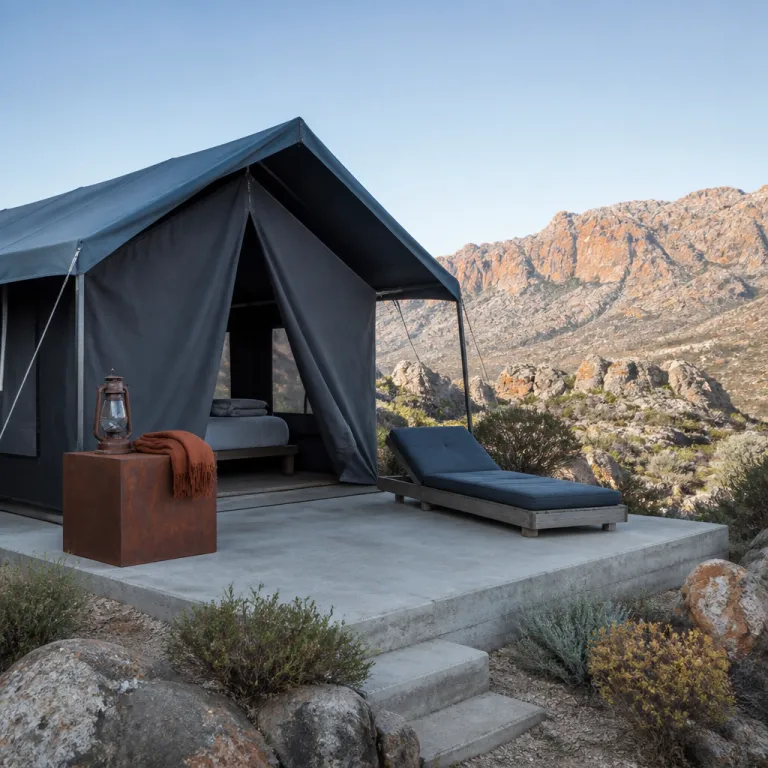
For many South Africans, the decision starts with the right lodge, because the architecture shapes how you meet the night sky. Mount Ceder Under Canvas Hideaways, set on a working olive farm along the Grootrivier, has become the reference point for Cederberg stargazing luxury lodges that take astro tourism seriously. Three 70 square metre canvas units named Orion, Scorpius and Crux face the river and the Cederberg mountains, each with a glass front, an ensuite suite style bathroom and a private wood burning hot tub on the deck.
By day you can follow hiking trails from the farm into ochre rock formations, then cool off in the shared swimming pool or the river shallows below the house style main area. At night the canvas walls seem to disappear, and you lie in a king bed that sleeps two adults in comfort, with a third person sharing on a daybed if needed, while the Milky Way drifts past the glass frontage. Air conditioning keeps the room temperate in summer, while a wood burning stove takes over in winter, so you can step from hot tub to heated suite without losing the spell of the wilderness.
Further south, Cederberg Ridge near Clanwilliam offers a more traditional lodge aesthetic, with plastered walls, deep verandas and a swimming pool terrace that frames long views over the Cederberg wilderness. Here, friendly WiFi and thoughtful in room amenities sit alongside guided drives to rock art sites and sundowners above the valley, making it ideal if you want a softer landing than a remote farm. Families appreciate that each room or suite can accommodate a child on a sleeper couch, while the kitchen is happy to arrange an early braai for younger travellers before the stargazing begins.
On the higher plateaus, Kagga Kamma leans into its otherworldly rock formations with open air star suites carved into the sandstone, which suit couples more than a family with a small child. These suites are not for everyone, because you trade a conventional room for a bed under the sky, but the sense of sleeping inside the Cederberg mountains is unmatched. If you prefer a more classic wilderness reserve feel with structured activities, Bushmans Kloof offers refined rooms, a manicured lawn around the pool and one of the region’s most important rock art collections, all within easy reach of Cape Town by road.
When you compare these Cederberg stargazing luxury lodges, think carefully about how you like to spend your days, not just your nights. Bushmans Kloof excels at guided rock art walks and conservation focused experiences, while Kagga Kamma is stronger for raw wilderness and dramatic geology. Mount Ceder Under Canvas and Cederberg Ridge sit in the sweet spot for a South African road tripper who wants easy self drive access from Cape Town, a friendly welcome, reliable WiFi and the freedom to braai, hike or simply check availability online and do very little once they arrive.
Many travellers pair a few nights in the Cederberg with time in the Winelands, and a resource like a guide to wine country hotels where cellar and kitchen work in harmony can help you balance starfields with cellar doors. That combination lets you move from river facing canvas to vineyard facing suites in a single trip, without losing the thread of thoughtful hospitality. The contrast between a Cederberg wilderness lodge and a Cape Winelands farm stay is part of what makes a South African holiday feel layered rather than linear.
How to read the astronomical calendar from April to September
Planning around the astronomical year matters as much as choosing the right lodge, especially when you are driving up from Cape Town for a long weekend. The Milky Way core is best seen in the Southern Hemisphere from roughly April to September, which aligns neatly with the Cederberg’s dry season and its reputation for clear nights. During these months, Cederberg stargazing luxury lodges often schedule guided sessions around 20h00, when the sky is fully dark but the air has not yet turned icy.
From late autumn into winter, the galactic centre rises earlier in the evening, so you can enjoy a hot tub session under dense star clouds without staying up past midnight. This is particularly appealing at places like Mount Ceder Under Canvas, where each canvas suite has its own wood burning hot tub and you can slip from steaming water to a warm room in seconds. Families with a child in tow often appreciate that the main stargazing window falls before bedtime, allowing everyone to sleep well before an early start on the hiking trails or a gentle mountain bike ride along the river.
Meteor showers add another layer, though they should be treated as a bonus rather than the main reason to book. The Perseids and Geminids are visible from South Africa, but their northern bias means you will see fewer streaks than in Europe, so the real show remains the Milky Way and the dark dust lanes that cut across it above the Cederberg wilderness. Lunar cycles also matter, because a full moon washes out faint stars, while a new moon week turns the sky above Clanwilliam and the wider Cederberg mountains into a black velvet backdrop for the constellations.
When you check availability at your chosen lodge, look at a moon phase calendar and aim for the week around new moon if stargazing is your priority. If you prefer a more social atmosphere with moonlit braai evenings and easier navigation around the farm or wilderness reserve, a waxing half moon can be a pleasant compromise. Either way, pack warm layers, because even with air conditioning and wood burning fireplaces in your suite, the short walk from room to hot tub or from house to telescope can feel bracing in mid winter.
Many South Africans weave the Cederberg into a broader safari circuit, and it pairs well with malaria free reserves that handle families with ease. If you are weighing up your wildlife options, a resource such as an in depth look at family friendly malaria free reserves can help you decide where to go after your stargazing nights. For a first time safari, you might also compare private reserves like Sabi Sands, Timbavati and Welgevonden using a specialist guide, which you can find through a detailed comparison of South Africa’s classic private reserves.
From Cederberg to Karoo: Sutherland and the wider dark-sky map
While the Cederberg offers the most accessible dark sky experience for travellers based in Cape Town, it is not the only South African region worth your telescope time. Drive further inland and you reach the Karoo town of Sutherland, home to the Southern African Large Telescope and a cluster of observatories that sit in some of the darkest skies on the continent. The difference is that Sutherland feels more like a scientific outpost than a wilderness reserve, whereas Cederberg stargazing luxury lodges wrap the same quality of darkness in river valleys, rock formations and carefully designed suites.
In Sutherland, you typically stay in a guest house in town and drive out to the SALT precinct for guided tours, which focus on the instruments rather than the hospitality. In the Cederberg, by contrast, the lodge itself becomes part of the experience, whether you are soaking in a hot tub at Mount Ceder Under Canvas, sitting beside the pool at Cederberg Ridge or warming your hands at a wood burning firepit at Bushmans Kloof. Both geographies share low humidity, high altitude and minimal light pollution, but only the Cederberg layers in rock art, mountain biking and river swims between your night sky sessions.
For many South Africans, the choice comes down to how they want their days to feel. If you are happiest moving between a farm kitchen, a braai area and a friendly bar before stepping out to the telescope, then a Cederberg lodge near Clanwilliam or in the heart of the Cederberg wilderness will suit you better than a Karoo town. If you are deeply curious about the engineering behind modern astronomy, Sutherland’s observatories and their guided tours offer a level of technical detail that even the best equipped Cederberg stargazing luxury lodges cannot match.
There is also a climate nuance that matters when you are planning from Cape Town. The Karoo can be brutally cold at night in winter, which makes the walk from room to telescope feel longer, even when your guest house has efficient air conditioning and thick duvets. The Cederberg mountains are cooler than the coast but generally milder than the high Karoo, so you can linger longer in the hot tub or on the deck without rushing back to your room, especially when a wood burning stove is waiting inside.
Some travellers choose to experience both regions on a single road trip, starting with a few nights in a Cederberg wilderness lodge and then heading inland to Sutherland for a more technical astronomy immersion. That combination works particularly well if you are travelling with a child who loves science, because the Cederberg offers nature, hiking trails and swimming by day, while Sutherland provides the thrill of real research telescopes at night. Either way, you return to Cape Town with a new sense of how much dark sky still exists within a day’s drive of the city.
What genuine astro lodges do beyond the “star bath” cliché
Luxury marketing has fallen hard for the language of star baths and celestial suites, yet not every property that mentions the Milky Way is serious about astronomy. The genuine Cederberg stargazing luxury lodges share a few concrete traits, starting with their location in the darker parts of the Cederberg wilderness and their commitment to keeping external lighting low and warm toned. They also invest in proper telescopes, partner with local astronomers and train their teams to explain the sky rather than simply pointing out Orion’s Belt over the braai.
At Cederberg Ridge, for example, the team offers guided stargazing sessions that sit alongside game drives, rock art excursions and mountain bike outings, rather than being an afterthought. Bushmans Kloof integrates the night sky into its broader conservation narrative, linking the constellations to the rock art panels you visit by day and the wilderness reserve you traverse at dusk. Mount Ceder Under Canvas goes further by designing each canvas suite so that the bed faces the sky, with glass fronts, minimal internal light spill and private decks where a person sharing the hot tub can still see the Milky Way reflected in the water.
Serious astro focused lodges also think about comfort in small but telling ways. They provide red filtered torches to protect night vision, encourage guests to dim their room lights during stargazing hours and ensure that friendly WiFi does not mean glaring routers on the deck. Air conditioning units are chosen for quiet operation, wood burning stoves are positioned so that smoke does not drift across the telescope field and pet friendly policies are managed carefully, because a restless dog can be charming around the house but distracting beside the eyepiece.
For eco conscious luxury travellers, the deeper question is how these lodges balance indulgence with impact. The best Cederberg properties source water carefully from the river or boreholes, limit the number of rooms so that each lodge sleeps fewer guests and invest in local employment, guiding and rock art conservation. They also encourage low impact activities such as hiking trails, mountain biking and swimming in natural pools, which let you engage with nature without adding to vehicle pressure on the Cederberg wilderness.
When you are ready to check availability, look beyond the star themed room names and ask specific questions about equipment, guiding and light management. A property that can explain its approach to dark sky preservation, its partnerships with local astronomers and its policies on external lighting is far more likely to deliver the kind of night you imagine when you think of the Cederberg mountains under a river of stars. In the end, what stays with you is not the star rating, but the quiet moment when you step from a wood burning hot tub onto a cool deck and realise that the sky above this corner of the Western Cape still belongs mostly to the wilderness.
FAQ
What is the best time to visit the Cederberg for stargazing ?
The clearest skies in the Cederberg generally fall between April and September, when inland weather is drier and cloud cover is lower. During these months, the Milky Way core is visible in the evening, which suits travellers who prefer not to stay up very late. Outside this window you can still enjoy good stargazing, but you may need to be more flexible with your nights and accept occasional cloud.
Are children allowed on stargazing tours at Cederberg lodges ?
Most Cederberg lodges welcome families and allow children on stargazing activities, provided a parent or guardian is present. It is wise to check age guidelines when you check availability, because some properties set a minimum age for late night sessions or for open air sleep outs. If you are travelling with a younger child, choose a lodge that offers earlier evening sessions and the option to return to the room quickly if they become tired.
Do Cederberg stargazing lodges provide WiFi and modern comforts ?
Many Cederberg stargazing luxury lodges offer complimentary WiFi in rooms and main areas, though speeds can be slower than in Cape Town. Properties such as Cederberg Ridge balance friendly WiFi access with careful light management, so routers and screens do not spoil the dark sky. You can also expect modern comforts such as air conditioning or heating, quality bedding and, at some lodges, private hot tubs or plunge pools.
How far is the Cederberg from Cape Town by road ?
The main Cederberg lodge area around Clanwilliam lies roughly 250 kilometres north of Cape Town, which translates into about a three hour drive on good tar roads. Once you leave the N7, some properties require a short stretch of gravel, but these roads are usually manageable in a standard sedan in dry weather. It is still sensible to arrive before dark, both for safety and to enjoy the changing rock formations as you approach the mountains.
What should I pack for a stargazing focused stay in the Cederberg ?
Pack warm layers, including a beanie and gloves, because temperatures drop quickly after sunset even when days are warm. A headlamp with a red light setting helps preserve night vision, and closed shoes are useful for walking between your room, the telescope area and any rock art sites you visit. Many lodges provide blankets and hot drinks during stargazing sessions, but bringing your own binoculars can add another dimension to the experience.