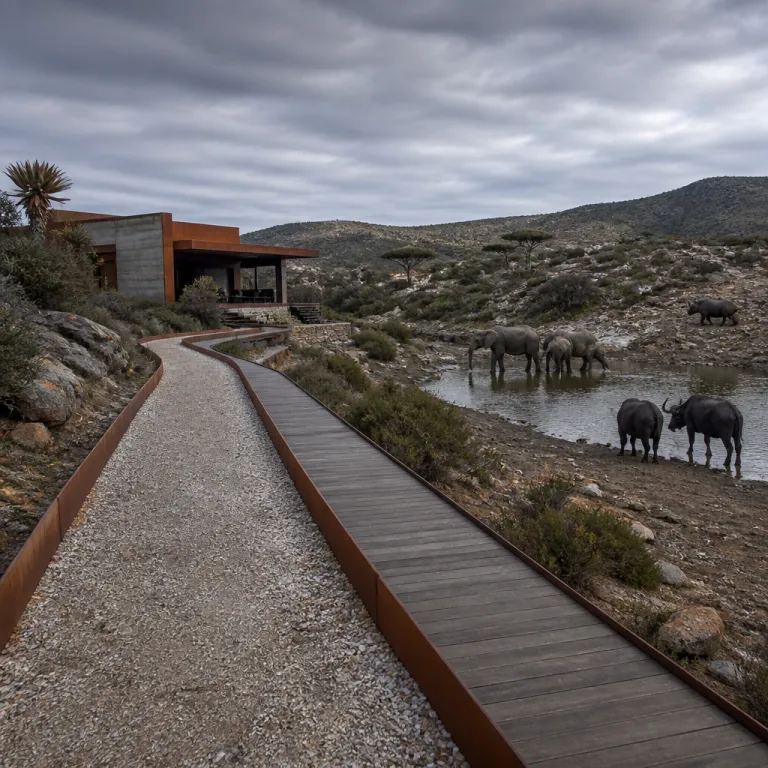
The geographic case for an Eastern Cape malaria-free safari
For a South African couple planning a honeymoon, geography matters. An Eastern Cape malaria-free safari places you within an hour’s drive of Port Elizabeth (Gqeberha), around two hours from East London, and neatly on the hinge between the Garden Route and the Wild Coast. That means less time in airports and more time on the deck of a safari lodge watching wildlife move through the reserve in the soft evening light.
The Eastern Cape sits at the southern edge of Africa where fynbos, thicket and grassland meet, so a single safari can feel like several different safaris stitched together. Because the entire Eastern Cape safari region is completely malaria free, you avoid the calculation about whether to take malaria prophylaxis, which is especially reassuring for pregnant travellers or those planning a future family. For many guests from Cape Town or Johannesburg, that “malaria free” label is not a luxury add on but the structural reason to choose these private game reserves over more famous northern parks.
From Cape Town, you can fly directly to Port Elizabeth in roughly 1 hour 15 minutes and be on a game drive in a private game reserve before sunset, rather than connecting through multiple hubs to reach a national park on the other side of South Africa. Typical road transfers from the airport to major Eastern Cape reserves take 45 to 90 minutes, which keeps travel days short. This is safari country that respects your annual leave, your energy levels, and the romance of a trip that flows rather than fragments.
Shamwari, Kwandwe, Lalibela and Amakhala: lodges that justify the spend
Shamwari Private Game Reserve is the Eastern Cape’s headline act, a 25 000 hectare private game reserve that has quietly refined the art of the luxury lodge. At Shamwari Bayethe Tented Lodge, canvas suites sit under fever trees with plunge pools looking over a valley where game moves between thicket and open plains. Eagles Crag, by contrast, feels cocooned in dramatic rock faces, ideal for a honeymoon couple who want privacy between game drives and a sense of being wrapped in the reserve itself.
Kwandwe Private Game Reserve stretches along the Great Fish River, and Kwandwe Great Fish River Lodge offers a clean lined, contemporary take on safari lodge style that still feels rooted in the eastern landscape. Melton Manor, booked as a private game villa with its own team and vehicle, works beautifully for a multi generational family safari where grandparents, parents and children can share long lunches between game drives. For couples who want the best balance between privacy and value, pairing two nights at Great Fish River Lodge with two nights at Melton Manor can create a rhythm of shared lodge life and intimate private game time.
Lalibela Game Reserve, at around 7 000 hectares, feels more compact but has strong game density and a relaxed, warm atmosphere at Mark’s Camp, which suits both couples and family groups. Nearby Amakhala Game Reserve offers Amakhala Bush Lodge, where tented suites with plunge pools face a valley that often fills with wildlife in the late afternoon. For parents wondering whether a safari can actually rest them, not just the children, it is worth reading a detailed guide to family safaris that genuinely prioritise recovery before choosing between these Eastern Cape reserves. As a planning benchmark, nightly rates for malaria-free Eastern Cape lodges typically range from mid-market (around R4 000–R6 000 per person sharing) to high-end luxury (from roughly R10 000 per person sharing) depending on season, lodge category and whether private vehicles are included.
Game density, Big Five reality and how it compares to Sabi Sands
Every South African traveller eventually asks the same question about an Eastern Cape malaria-free safari; how does the game viewing compare to Sabi Sands or a classic Kruger National Park itinerary. The honest answer is that Sabi Sands and some Madikwe game reserves still offer higher predator density and more frequent leopard sightings, with many lodges there reporting regular leopard encounters on most drives in peak season, but the Eastern Cape has closed the gap significantly for most guests. Lion, elephant, buffalo, leopard and rhino are present across the region's private reserves, and the mix of habitats often means more varied wildlife encounters on a single game drive.
Shamwari’s 25 000 hectares allow for proper ranging, and sightings there can feel as wild as anything in the north, especially on longer game drives that move from open plains into thicker valley bushveld. Kwandwe’s riverine corridors are excellent for elephant and buffalo, while Lalibela and Amakhala often deliver concentrated sightings of plains game, which in turn support predators. Addo Elephant National Park, home to one of the densest elephant populations in South Africa according to recent SANParks reports and marketed as a Big Seven destination, sits close enough to fold into a longer itinerary, giving you a national park experience alongside the intimacy of private game reserves.
If you are the kind of traveller who wants wall to wall big cat action, then Sabi Sands, Madikwe or even Pilanesberg National Park may still be the better fit. For many honeymoon couples, though, the balance of reliable Big Five sightings, malaria free peace of mind and shorter transfers from Cape Town or the Garden Route tips the scales toward the Eastern Cape. A smart move is to pair a few nights in these reserves with time inland along the mountain interior of the Garden Route, letting forest, coast and safari speak to each other in one coherent journey.
Bush and coast in fewer flights: building a flowing honeymoon itinerary
One of the strongest arguments for an Eastern Cape malaria-free safari is how elegantly it pairs with the coast. From Cape Town you can fly to Port Elizabeth, transfer an hour to a private game reserve, then later drive or fly to a beach retreat without ever touching a malaria zone. That means your honeymoon can move from city to safari to sea in three flights instead of four or five, with less time in transit lounges and more time in the bush or on the sand.
A classic pattern for safaris north of the Cape has been to combine Kruger with Mozambique or the KwaZulu Natal coast, but that usually involves longer hops and at least one extra connection. By contrast, an Eastern Cape and Garden Route combination lets you drive scenic coastal roads, stop in small towns and finish with two or three nights of guided game drives in a malaria free reserve before flying home. Couples often start with a few nights in Cape Town, then head along the Garden Route, and finally close the circle with Shamwari, Kwandwe, Lalibela or Amakhala before looping back via Port Elizabeth.
To picture the flow, imagine a seven night honeymoon: two nights in Cape Town, two nights exploring the Garden Route near Knysna or Plettenberg Bay, and three nights on safari at an Eastern Cape private game reserve within easy reach of Port Elizabeth. If you want to add a whale watching or wine element, it is easy to fold in a stay in Hermanus or the Overberg on either side of your safari. A detailed guide to where to stay in Hermanus before the southern right whales arrive can help you choose a property that matches the level of your safari lodge. The result is a honeymoon that feels like one continuous narrative rather than a series of disconnected flights between national parks and distant coasts, and it keeps the entire journey within South Africa’s malaria-free southern belt.
When the Eastern Cape is the right answer – and when it is not
For many South African based travellers, an Eastern Cape malaria-free safari is the correct default, not a consolation prize. If you are pregnant, planning to conceive soon, travelling with young children or simply prefer to avoid malaria medication, these reserves remove an entire layer of anxiety from your trip. The fact that they sit close to Port Elizabeth and the Garden Route only strengthens the case, especially when you want a safari that fits into a broader Cape Town centred itinerary.
There are, however, clear scenarios where only Sabi Sands, Madikwe or even Tswalu Kalahari will do. If your dream is to track habituated leopards on every drive, or to experience the vastness of a semi desert private game reserve where you may not see another vehicle for hours, then the northern and north western game reserves still hold the edge. Pilanesberg National Park also remains a strong option for Gauteng based couples wanting a quick Big Five hit without a long flight, though it lacks the coastal pairing that makes the Eastern Cape so compelling.
Think of the Eastern Cape as the best answer when you want a safari that integrates seamlessly with Cape Town, the Garden Route and perhaps Addo Elephant National Park, all while staying malaria free. When your priority is extreme predator density, rare species or a once in a lifetime splurge on a place like Tswalu Kalahari, then you may accept the extra flights and malaria considerations. The key is to be honest about your own appetite for travel time, medication and budget, then choose the reserve, lodge and national park combination that supports the kind of romance you actually want, not the one someone else posted online.
FAQ
Is the Eastern Cape malaria-free?
Yes, the Eastern Cape safari belt is regarded as malaria-free, including the main private game reserves such as Shamwari, Kwandwe, Lalibela and Amakhala, as well as Addo Elephant National Park. For travellers who prefer to avoid malaria medication, this makes the region especially attractive.
Can you see the Big Five in the Eastern Cape?
Yes, lion, elephant, buffalo, leopard and rhino occur across the region's private reserves, and lodges such as Shamwari Private Game Reserve, Kwandwe Private Game Reserve and Lalibela Game Reserve all offer credible Big Five viewing. Leopard can be more elusive than in Sabi Sands, but overall Big Five access is strong for most guests.
What is the best time to visit the Eastern Cape for safari?
The dry winter months of May to September usually provide the most reliable Big Five game viewing because vegetation is thinner and wildlife tends to concentrate around rivers and waterholes. The summer months bring greener landscapes, warmer evenings and excellent birding, which some honeymoon couples prefer for photography and atmosphere.
How does an Eastern Cape safari compare to Kruger for a honeymoon?
An Eastern Cape malaria-free safari typically involves shorter transfers, fewer flights and easier combinations with Cape Town and the Garden Route. Kruger and Sabi Sands can offer higher predator density, especially for leopard, but often require more complex routing and malaria considerations. For many honeymooners, the Eastern Cape’s balance of comfort, safety and coastal access makes it the more relaxed choice.
Can I combine Addo Elephant National Park with a private reserve stay?
Yes, many travellers pair Addo Elephant National Park with a nearby private game reserve such as Shamwari, Kwandwe or Lalibela. Addo provides a self drive national park experience with very high elephant numbers, while the private reserves offer guided game drives, more intimate lodges and a slower, more curated rhythm. This combination works particularly well for couples who enjoy both independence and full service hospitality.
Sources
South African National Parks (SANParks) – official information on Addo Elephant National Park and other national parks in South Africa, including recent elephant population estimates and conservation data.
Shamwari Private Game Reserve – official data on reserve size, conservation initiatives and lodge offerings in the Eastern Cape, including sample itineraries and transfer guidance.
Lalibela Game Reserve and Eastern Cape private reserves portals – regional overviews, conservation context and visitor guidance for malaria-free safaris south of Port Elizabeth, including indicative rate ranges, transfer times and sample honeymoon routes.