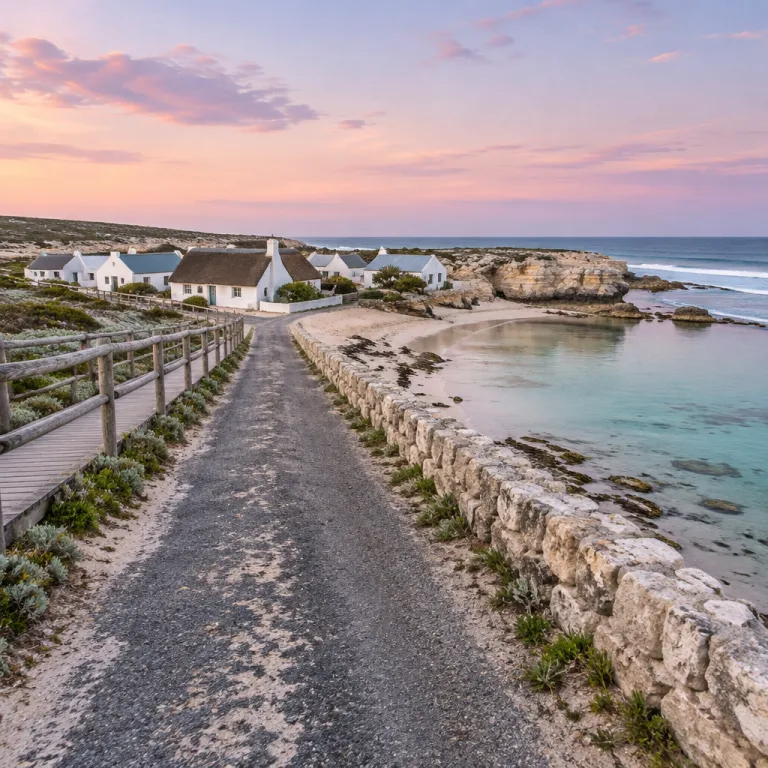
Arniston luxury accommodation in the Overberg: end‑of‑the‑road romance
Arniston (also known as Waenhuiskrans) sits where the tar finally thins out and the Overberg coast exhales. This is not a place of neon signage and a main drag of chain hotel façades, but a fishing village whose whitewashed cottages and Kassiesbaai heritage homes still frame daily life. For a South African couple weighing Arniston luxury accommodation in the Overberg against more obvious choices such as Hermanus or Paternoster, that end‑of‑the‑road feeling becomes the real upgrade.
The village curves around a beautiful natural bay, with the sea‑facing dunes and limestone cliffs shaping every view. From the Waenhuiskrans cave to the tidal pools, the western horizon feels wide open, while the compact location keeps everything walkable and quietly intimate. You come here to stay in a hotel or guesthouse that feels stitched into the Western Cape landscape, not perched above it.
Most high‑end stays in Arniston centre on a handful of characterful properties rather than a skyline of towers. The best known is the Arniston Spa Hotel on Main Road, Arniston, Western Cape (telephone +27 (0)28 445 9000), a low‑slung white building with sea‑facing wings and a relaxed, family‑run atmosphere. Around it, smaller guesthouses and self‑catering suites offer rooms and full apartment‑style layouts, giving honeymooners a choice between spa hotel comforts and private, key‑in‑the‑door seclusion, with typical nightly rates that rise noticeably during South African school holidays and long weekends.
Where to stay: sea‑facing calm, pool‑facing ease
For many travellers, Arniston Spa Hotel anchors the local hospitality scene with a mix of sea‑facing and pool‑facing rooms. The building steps down towards the water, so even non‑view categories often catch a sliver of ocean or a beautiful western light at sunset. Couples looking for comfortable Arniston accommodation in the Overberg that balances ease and atmosphere will find this coastal spa hotel a practical yet romantic base.
Inside, the room categories range from compact doubles to more generous suite layouts, some with balconies directly facing the bay and on‑site parking close to the entrances. Neutral tones, simple log‑framed furniture and large windows keep the focus on the view, while facilities including a sheltered swimming pool, a small hotel spa and lounges mean guests enjoy the property even when the wind picks up. It is not about marble and chandeliers, but about waking to the sound of waves and walking straight from your room to the tidal edge, so pack a light windbreaker, comfortable walking shoes and a warm layer for cooler evenings.
The on‑site Arniston Spa, sometimes referred to as the Ginkgo Spa, adds a layer of indulgence that appeals to honeymooners. This is a classic Western Cape spa hotel set‑up, with treatment rooms, a calm relaxation area and therapists used to tailoring sessions after long drives from Cape Town. Between massages, the main terrace and pool‑facing deck become informal social hubs where guests share tips on the best low‑tide walks and the quietest corners of the beach, a rhythm very different from larger coastal resorts such as the refined stays at Shelly Point along the West Coast.
Kassiesbaai, Waenhuiskrans and the De Hoop connection
Step away from your hotel base and Arniston reveals its deeper character in Kassiesbaai, the historic fishing quarter. Here, low cottages, some now converted into simple rooms or a self‑contained suite, sit almost on the sand, with fishing boats pulled up facing the sea and washing lines framing the view. This is where the village’s traditional South African coastal culture still feels intact, and where guests enjoy a slower, more grounded rhythm.
From the main beach, a walk of about 30 to 40 minutes along the limestone cliffs leads towards the Waenhuiskrans cave, accessible at low tide and best tackled with local advice. The path offers a series of sea‑facing vantage points, each more dramatic than the last, and reminds you why upmarket Arniston accommodation options lean into landscape rather than nightlife. On clear days, the western light turns the rock honey‑coloured, and even a modest room with a partial sea view feels like a front‑row seat to the elements; check the daily tide tables posted at reception or in the village and aim to reach the cave at least 30 minutes before the lowest point.
Just up the coast, De Hoop Nature Reserve lies roughly 50 kilometres away by road and extends the experience into fynbos, dunes and seasonal whale watching, typically from June to November, according to CapeNature visitor information. Many couples split their time between a coastal room in the village and a stay inside the reserve, combining beach walks with guided drives and vlei birding. If you are considering a broader itinerary that pairs coast with bush, you might include a later safari leg in the Greater Kruger region near Hoedspruit, then loop back via the Garden Route’s mountain interior, where the coast holiday becomes a forest one and contrasts beautifully with the pared‑back charm of Arniston.
Why Arniston, not Hermanus: intimacy by design
Hermanus has the restaurants, the galleries and the polished promenade, but it also has traffic, tour buses and a far more developed hotel strip. Arniston, by contrast, offers a single spa hotel, a scattering of guesthouses and a few self‑catering cottages, which means the number of rooms is naturally capped. That scarcity is what makes luxury accommodation in Arniston and the wider Overberg feel quietly exclusive without ever becoming ostentatious.
In practical terms, this means you are more likely to recognise the same guests at breakfast, to log a familiar face at the swimming pool and to chat with staff who remember your tea and coffee preferences. The hotel offers simple comforts such as in‑room tea and coffee trays, a small but thoughtful list of facilities including board games for windier days and a restaurant that leans into African cuisine rather than generic international menus. When the weather turns, the lounge with its log fireplace becomes the main social hub, and the sense of being in a shared coastal retreat rather than an anonymous hotel complex really settles in.
For honeymooners, that intimacy matters as much as any spa treatment or sea view. You can walk from your room to the harbour in minutes, watch the fishing boats return, then wander back past Kassiesbaai as the western sky softens. If you crave a different kind of coastal retreat on another trip, you might look at refined coastal escapes further north, but for a first or second anniversary, the end‑of‑the‑road quality of Arniston tends to linger longer in the memory than a longer list of facilities.
Planning your stay: access, dining and practical details
Reaching Arniston from Cape Town is straightforward, with a drive of roughly 200 kilometres through the rolling Overberg farmlands. The main route runs via Caledon and Bredasdorp on good tar roads, so most couples in a standard sedan will arrive without drama, though it is wise to account for occasional roadworks and farm traffic. As you approach the Arniston turnoff, the landscape flattens, the sea air sharpens and the sense of leaving the city behind becomes very real; allow extra time in peak holiday seasons when traffic through Somerset West and the N2 can slow.
Once in the village, you will find a compact cluster of facilities including a small convenience store, a handful of informal eateries and the hotel restaurant, which often serves traditional South African dishes alongside lighter options. Menus tend to feature fresh line fish, simple grills and desserts that feel comfortingly old school, rather than elaborate tasting menus. For couples used to Cape Town’s fine‑dining scene, the shift can feel pared back, but many guests enjoy the honesty of a plate of grilled fish eaten within sight of the boats that brought it in, and often book a table for sunset on arrival day to avoid disappointment.
Inside the Arniston Spa Hotel and similar properties, expect standard amenities such as tea and coffee stations in each room, Wi‑Fi access that may be slower than in the city and a modest account log system for charging drinks and spa treatments to your room. The Arniston Spa and Ginkgo Spa facilities usually include a mix of massages, facials and body treatments, ideal after long beach walks or a day trip into De Hoop Nature Reserve. When you compare Arniston accommodation in the Overberg online, focus less on star ratings and more on whether the room layout, orientation of sea‑facing rooms and overall location match how you like to spend your coastal days, and confirm parking arrangements if you plan to arrive late at night.
FAQ
How far is Arniston from Cape Town and what is the drive like ?
Arniston lies about 200 kilometres from Cape Town, typically a two‑and‑a‑half to three‑hour drive via Caledon and Bredasdorp on good tar roads, as indicated on standard Western Cape road maps. The route passes through rolling Overberg farmland with occasional mountain passes but no technical driving. It is comfortable in a standard sedan, with fuel, snack stops and public toilets available in towns such as Caledon, Napier and Bredasdorp.
Is Arniston a good choice for a honeymoon or anniversary trip ?
Arniston works well for romantic trips because it is small, quiet and visually striking, with sea‑facing cliffs, a sheltered bay and the historic Kassiesbaai quarter. The limited number of rooms and suites keeps things intimate, while the presence of a spa hotel and nearby De Hoop Nature Reserve adds enough structure for a week‑long stay. Couples who value privacy, walks and unhurried meals tend to find the village especially rewarding, particularly outside peak December and Easter holiday periods.
What kind of accommodation can I expect in Arniston ?
The village offers one main hotel with a spa, a mix of guesthouses and several self‑catering cottages or apartments. Rooms range from simple doubles to larger suites, some with balconies or terraces facing the sea or pool, and most properties provide on‑site or street‑side parking. Décor is generally relaxed and coastal rather than ultra‑opulent, with the emphasis on views, fresh air and proximity to the beach, and nightly rates usually increase in high season when demand for sea‑facing rooms is strongest.
Are there good dining options in Arniston for longer stays ?
Dining in Arniston centres on the hotel restaurant and a few smaller local spots, many of which serve fresh seafood and traditional South African dishes. Menus are not as extensive as in Hermanus or Cape Town, so longer stays often mix restaurant meals with simple self‑catering. Booking ahead for weekend dinners is sensible, especially in peak holiday periods such as school holidays and long‑weekend breaks, and it is worth checking current opening hours with your guesthouse or hotel reception.
How does Arniston compare with other Western Cape coastal retreats ?
Compared with more developed towns such as Hermanus or Paternoster, Arniston feels quieter and more residential, with fewer tourists and less commercial infrastructure. The focus is on the bay, the Waenhuiskrans cave and the nearby De Hoop Nature Reserve rather than shopping or nightlife. For travellers who prefer understated luxury, a strong sense of place and easy access to nature, that trade‑off is usually a positive one, especially if you are happy to swap a long restaurant list for empty beaches and starry nights.